



Background of Winter Pet Care Guide
Winter brings freezing temperatures, snow, and ice—conditions that can be dangerous for pets. This guide is designed for pet owners in snowy regions, offering science-backed tips to keep dogs and cats safe, warm, and healthy.
Winter Care Guide: Protecting Pets in Snowy States
Winter can be magical—fresh snowfalls, shimmering icicles, and crisp cool air—but for our pets, the cold season brings unique challenges that shouldn’t be ignored. Dogs and cats need extra care and protection in snowy states, especially when temperatures drop below freezing. While many pets enjoy winter playtime, their safety, comfort, and health must always come first.
This comprehensive winter pet-care guide covers essential tips for keeping pets safe from frostbite, hypothermia, icy hazards, and winter toxins. Whether you live in snowy mountains, icy rural towns, or northern suburban neighborhoods, this guide ensures your furry family members stay warm, happy, and healthy all season long.

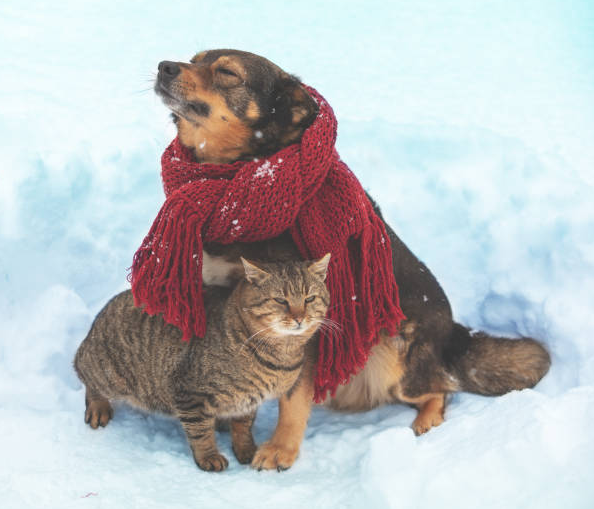
Why Winter Care Matters
Some breeds—like Huskies, Malamutes, Saint Bernards, and Maine Coon cats—are naturally built for cold climates. But most pets are not. Even thick-coated dogs can suffer from:
- Frostbite
- Hypothermia
- Dehydration
- Paw pad injuries
- Toxic chemical exposure (like antifreeze)
Temperatures below 45°F (7°C) require precautions, and temps below 32°F (0°C) mean many pets should limit outdoor time unless geared up and moving.

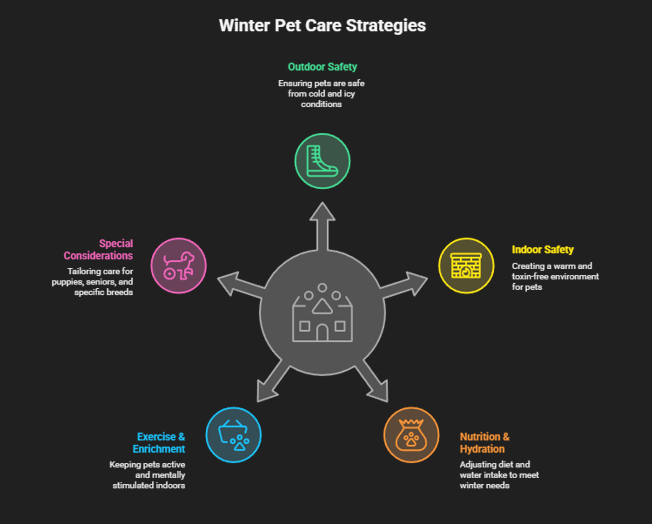
Cold-Weather Risks for Pets
1. Hypothermia
Hypothermia happens when a pet’s body temperature drops too low. Small breeds, seniors, short-haired pets, and kittens are most vulnerable.
Warning signs:
- Shivering
- Lethargy or sluggishness
- Weak pulse or shallow breathing
- Muscle stiffness
- Pale gums
If suspected, warm them gradually—never use hot water or electric heating directly on skin. Contact a vet immediately.
3. Ice Melt & Antifreeze Poisoning
Winter chemicals can be deadly:
- Ethylene glycol (traditional antifreeze) is extremely toxic
- Salt-based ice-melts burn paws & upset stomachs
Prevention:
- Use pet-safe ice melt
- Store chemicals securely
- Clean paws after walks
Tip: Look for propylene glycol-based antifreeze, considered safer for pets.
Outdoor Winter Pet-Safety Tips
Limit Outdoor Time
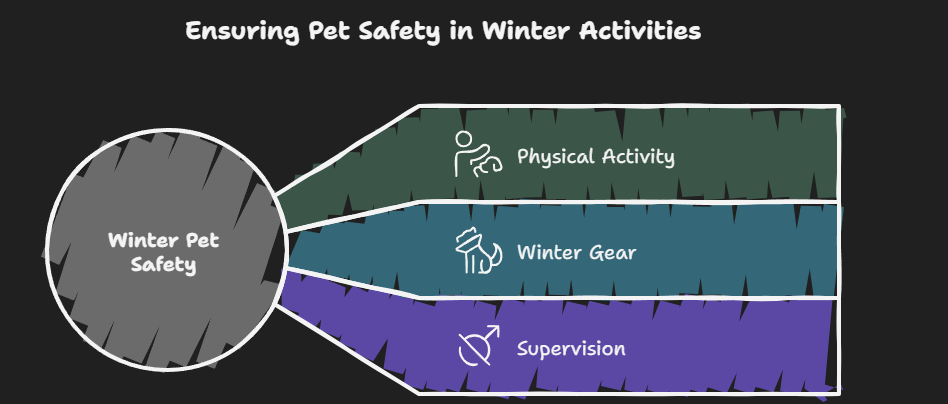
Pets should not be outside for long during freezing temps unless:
- Constantly moving (exercise)
- Wearing winter gear (if needed)
- Supervised
Rule of thumb:
If you’re cold, they’re cold—bring them inside.

Dress for Weather
Small, thin-haired, elderly, or short-nosed dogs may need:
- Insulated winter coats
- Waterproof booties
- Reflective collars for dark days
Coat doesn’t replace supervision—pets can still overcool quickly.
Snow Safety & Visibility
Snow can obscure scents and landmarks—pets can get lost easily. Use:
- ID tags + microchip
- GPS pet tracker
- Reflective leash & collar
Avoid frozen lakes; many pets fall through ice.
Paw & Skin Protection
Paw-Care Routine
Snow, ice, and salt damage paw pads. Protect by:
- Using paw balms
- Trimming fur between pads
- Rinsing and drying paws after walks
- Checking for cracks or redness
Booties are ideal, especially for dogs in heavy snow areas.
Dry Skin Solutions
Indoor heating + cold air = dry skin risk. Solutions:
- Humidifier in home
- Omega-3 fatty acids (vet-approved supplements)
- Moisturizing paw balms (pet-safe)
Avoid human lotions—many are toxic to pets.
Indoor Winter Safety for Pets
Create a Warm Resting Space
Provide a cozy bed away from drafts, including:
- Memory-foam beds for seniors
- Warm blankets
- Heated pet pads (with auto-shutoff only)
Avoid fireplaces or space heaters—risk of burns.
Nutrition & Hydration
Diet Adjustments
Active winter dogs burn more calories. Indoor cats/dogs may gain weight instead.
- Active outdoor pets: slightly increase calories
- Indoor pets: monitor diet to avoid winter weight gain
- Senior pets: check joint supplements with a vet
Never adjust diet drastically without guidance.
Keep Pets Hydrated
Cold weather reduces thirst instinct. Provide:
- Fresh water (not frozen outdoors)
- Heated outdoor bowls if needed
- Wet food to increase moisture intake
Never let pets drink from puddles or snowmelt—may contain chemicals.
Exercise & Mental Enrichment
Winter Walk Strategies
- Short, frequent walks instead of long ones
- Avoid high-traffic salted sidewalks
- Encourage indoor play if icy outside
Indoor Activities
Ideas to burn energy when stuck indoors:
- Puzzle feeders
- Tug-of-war
- Hide-and-seek scent games
- Cat climbing towers
- Laser pointer play (finish with treat)
Mental exercise prevents winter boredom & anxiety.
Special Considerations
Puppies & Seniors
These groups lose heat fastest—limit outside time.
Brachycephalic Breeds
French Bulldogs, Pugs, Persians struggle with temps & breathing. Use caution outdoors.


Outdoor or Barn Cats
Provide:
- Heated shelters
- Straw bedding (never blankets—they hold moisture)
- Fresh water heaters
- Frequent wellness checks
Spay/neuter reduces wandering in freezing weather.
Emergency Winter Pet Kit Checklist
Must-have supplies:
- Thermal dog jacket
- Paw balm + booties
- Emergency blanket
- Pet-safe ice melt
- Backup food/water
- First-aid kit
- GPS tag or ID tag
- Towel for drying after snow exposure
Be prepared for storms/power outages.
Conclusion
Snow or no snow, pets depend on us. With this guide, you’re ready to keep them safe, happy, and cozy all winter long.
Winter brings beauty—but also risks for pets. With proper preparation, warm shelters, coat & paw protection, safe exercise, and careful monitoring, dogs and cats can thrive in snowy climates. Your loving care is their greatest defense against winter dangers.


2 thoughts on “Winter Pet Care Guide: Keep Dogs & Cats Safe in Snow”
Comments are closed.