

Background of Fly Your Dog or Cat to the USA with Confidence
Travelling with your furry friend is a growing part of modern pet ownership. In the U.S., both federal authorities and airlines have specific rules in place to ensure the safety and welfare of dogs and cats during air travel. Understanding these laws and policies can help pet owners plan and avoid last-minute surprises or travel delays. This blog provides a detailed overview of the key legal and regulatory frameworks governing pet (dog & cat) air travel in the USA, plus practical tips for compliance and comfort.
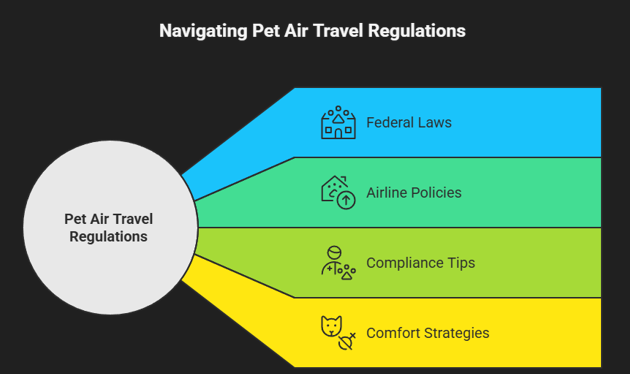
1. Federal Regulations: What Pet Owners Must Know
a) Role of United States Department of Agriculture (USDA) & Centers for Disease Control and Prevention (CDC)
- For pets traveling into the U.S. from abroad, the USDA’s Animal and Plant Health Inspection Service (APHIS) provides guidance and regulation.
- The CDC oversees importation of dogs (and to some extent cats) to manage zoonotic disease risk (notably rabies).
- For intra-U.S. movement (state to state) the USDA notes that they do not regulate routine owner-transport of pets; state requirements apply.
b) Age, health and documentation minimums
- For air travel within the U.S., federal rules require that dogs or cats be at least 8 weeks old and weaned for at least five days before transport.
- Under 9 CFR §3.15 (enforced by USDA for animals shipped by air carrier) there are limits on how many animals can share enclosures and documentation standards.
- For dogs entering the U.S. from abroad: must appear healthy; microchipped if from certain countries; meet rabies and other disease controls.’
For cats: the CDC states cats are not required to have proof of rabies vaccination for importation into the U.S., though vaccination is recommended.
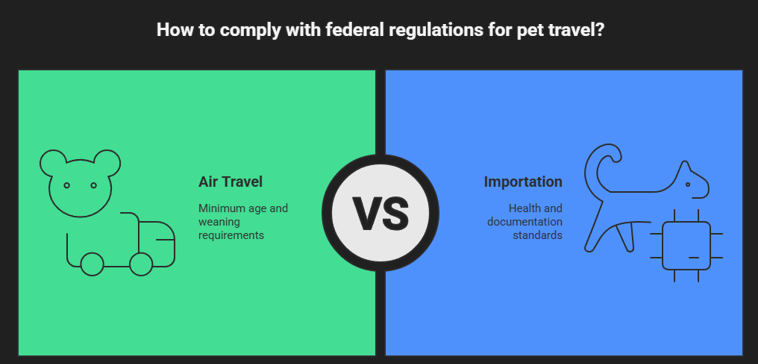
c) Interstate versus international movement
- If traveling domestically (state to state) with your dog or cat, the federal government does not impose travel restrictions for routine pet movement — the destination state sets the rules.
- If bringing pets into the U.S. from abroad, or exporting them, stricter federal regulatory oversight applies.
d) Kennel and transport container standards
- The federal regulations require specific standards for “primary enclosures” (pet carriers) for live dogs/cats in air transport — size, ventilation, strength, records, etc.
- The USDA’s “Preparing & Receiving Pets for Air Travel” guidance outlines how kennels should be selected and how pets should be prepared.
2. Airline Policies: What to Expect from Carriers
a) Age and size restrictions
- Many airlines in the U.S. require your pet to be at least 8 weeks old (domestic flights). For international flights or importation, older minimums apply. For example, Delta Air Lines states the pet must be 8 weeks old for domestic travel; for dogs arriving from abroad, 6 months old; for cats, 16 weeks.
- The carrier (crate) must fit under the seat if your pet is flying in the cabin (rather than cargo). Weight limitations may apply.
b) Cabin vs. cargo vs. checked baggage
- Some airlines allow small dogs and cats to travel in‐cabin if they fit in a carrier under the seat in front of you.
- Larger pets may have to go as cargo or checked baggage, which adds risk (temperature, handling). Airlines will have specific restrictions for breed types (especially brachycephalic breeds) and weather.
- Example: American Airlines states carry-on pets are limited to cats & dogs meeting size/age/destination requirements, and only accepted as checked pets at ticket counter.
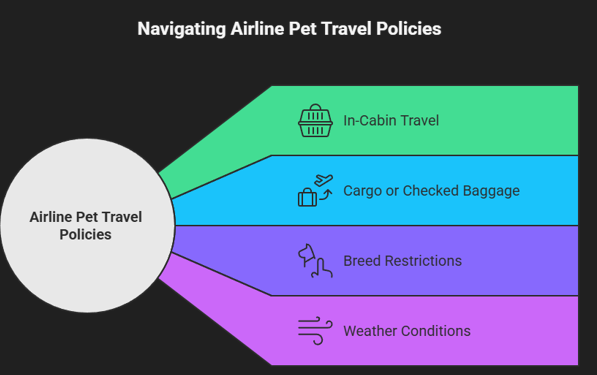
c) Fees, reservations & carrier requirements
- Airlines charge pet fees for in-cabin or cargo travel; you’ll need to reserve space for your pet (often limited).
- Examples of carrier requirements: the kennel must allow the pet to stand, turn around, lie down; pet must have access to food/water; carrier must meet airline’s size/ventilation standards.
d) Timing & other practical rules
- The U.S. Department of Transportation (DOT) states dogs and cats must not be brought to the airline for shipping more than four hours before departure (six hours if pre-arranged).
Airline may reject pets if temperatures are extreme (too hot/cold) or if breed is considered higher risk.
3. Step-by-Step: How to Prepare for Flying With Your Pet
Step 1: Check destination & route
- If flying domestically (within the U.S.), check your destination state’s rules for pet entry (vaccines, health certificate). USDA’s site provides links for state-to-state pet movement.
- If flying internationally or into the U.S., check federal rules: rabies history of your pet’s origin country, age requirement, microchip requirement, CDC import form (for dogs) etc.
- Check your airline’s pet transport policy for the specific flight, including cabin vs cargo rules and fees.
Step 2: Visit the veterinarian
- Ensure your dog or cat has a veterinary health check, is up to date on vaccinations (especially rabies, though cats may not require proof for U.S. import).
- Request a Certificate of Veterinary Inspection if required by the airline or destination state.
- If your pet is brachycephalic (short-nose breeds) or older/less healthy, consult about risks of flying in cargo.
- Obtain or confirm microchip if required (for dogs entering U.S. from abroad) and paperwork such as the CDC Dog Import Form.
Step 3: Select and prepare the carrier
- Choose an airline-approved pet carrier. It must allow your pet to turn around, stand, and lie down comfortably. Should meet size/ventilation/strength criteria.
- Acclimate your pet to the carrier ahead of travel — let them spend time in it at home.
- Label the carrier clearly with your contact information and include a bag of food, watering bottle and instructions if required.
Step 4: Book the flight and reserve pet travel
- When booking the flight, notify the airline you are bringing a pet. Confirm cabin availability or cargo option.
- Choose a direct flight if possible (reduces handling). Early morning or evening flights may be better to avoid extreme temperatures.
- Pay the pet fee and confirm drop-off procedures (check-in, where to bring pet, timing) according to airline’s instructions.
Step 5: Day of travel
- Make sure your pet has had a light meal a few hours before departure (but not a heavy meal).
- Arrive early, bring all required documents (health certificate, vaccination records, pet carrier etc.).
- At check-in, you may have to drop your pet at designated location (cargo or ticket counter). Make sure water is available and the carrier is secure.
- After arrival, inspect your pet and carry over to final destination, keeping them calm and monitored.
4. Common Pitfalls to Avoid
- Assuming all airlines treat pets the same: Policies vary significantly by carrier.
- Ignoring destination state requirements: Even if federal rules are satisfied, states may have additional health or age requirements.
- Booking last minute: Pet spots are limited, especially for cabin travel — early booking is advised.
- Using the wrong size carrier or failing to acclimate your pet: Can result in denial of boarding or stress for the pet.
- Overlooking age or breed restrictions: Many airlines restrict short-nose breeds or very young pets from cargo.
- Underestimating weather risks: Extreme heat or cold can mean your pet cannot fly in cargo hold that day.
Why This Is a Positive Experience (When Done Right)
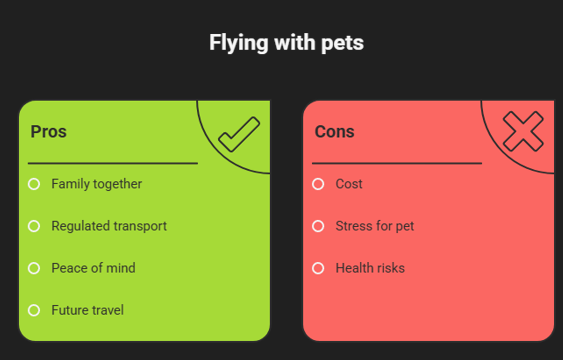
Flying with your dog or cat can be a rewarding experience for both you and your pet when properly managed. The advantages include:
- Keeping your family (including your pet) together during relocation, vacation or return from abroad.
- Ensuring your pet is transported under regulated conditions rather than being left behind or driven long-distance.
- Peace of mind knowing you followed official laws and airline policies, reducing stress and risk.
- Setting the stage for more pet-friendly travel in future (your pet becomes accustomed to the process).
Final Verdict
By taking time to understand both the legal/regulatory side (federal, state) and the airline’s policies, you can ensure a smooth, safe, and positive travel experience for your dog or cat. Preparation is key: vet check-up, correct carrier, reservation in advance, and awareness of destination requirements make all the difference. Your pet deserves to travel as part of the family and with the right planning, you can make it happen with confidence.

1 thought on “Fly Your Dog or Cat to the USA with Confidence”
Comments are closed.