

Background: Canada’s Strategic Trade Shift
Canadian Prime Minister Mark Carney announced a bold target of doubling the Canadian non-U.S. exports in the coming decade in October 2025. It is an effort to lower the excessive dependency on the United States, which is now believed to be set at over 75 per cent of the exports in Canada.
Carney pointed out that economic pressure caused by American tariffs, as well as trade uncertainties, are major factors driving this strategic change.
Some of the things that have been in the plan are renewed involvement in the major economies like China and India, and the investments made in the infrastructure to facilitate the diversification.
Future Impacts on the U.S. Economy
1. Potential Reduction in U.S. Exports to Canada
The shift of Canada may cause a reduction in the exports of the U.S. to the country, especially in automobiles, steel, and aluminum, among others, that have been tremendously influenced by the trade policies of the U.S. This transition will lead to a loss of jobs and a decrease in revenues of the U.S. industries that depend much on the Canadian market.
2. Disruption of Integrated Supply Chains
Near complete dependence of the U.S and Canadian supply chains, such as manufacturing and energy, may be disrupted. The shifts in the trade flows may result in higher costs and inefficiencies, which may have an impact on the economies of countries.
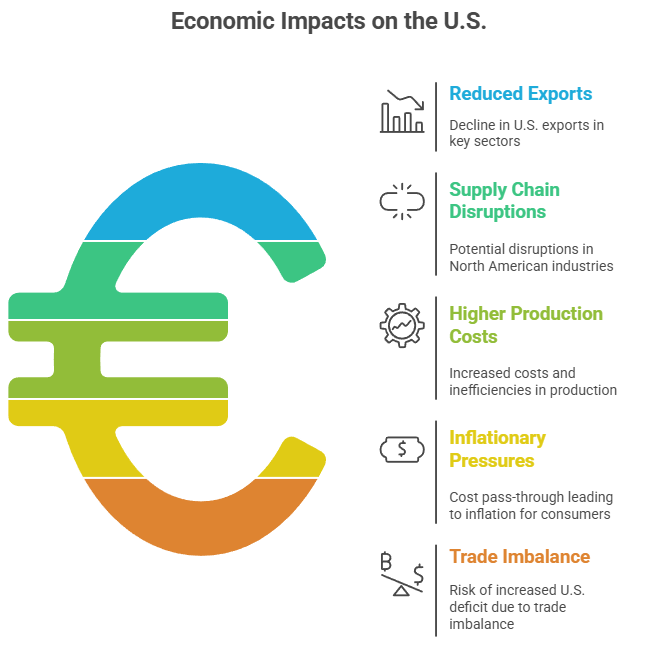
3. Inflationary Pressures and Trade Imbalances
Any decrease in trade with Canada might increase prices for U.S consumers, hence contributing to inflation. Moreover, changes in the balance of trade could change the trade balance in the U.S., and this could result in higher deficits.
Opportunities and Risks for the U.S.
Opportunities
Diversification of Trade Partners: The United States has the option to diversify to new markets to mitigate losses that are likely to come as a result of decreased trade with Canada.
Innovation and Competitiveness: U.S. industries can be encouraged to be more innovative and efficient by heightened competition.
Risks
Loss of Market Share: This will result in other markets capturing the attention of the Canadian industries, leading to loss of U.S market share to other countries, e.g., China and India.
Geopolitical Tensions: Unhealthy trade relations with Canada might unleash wider geopolitical tensions, and this will impact the stability in North America.
Recommended U.S. Policy Response
Strengthen Bilateral Trade Agreements: Via negotiations, tie-up with Canada on better terms of trade, solving mutual interests.
Invest in Infrastructure and Innovation: This should be carried out to improve domestic infrastructure and encourage innovation to ensure one is competitive in the international market.
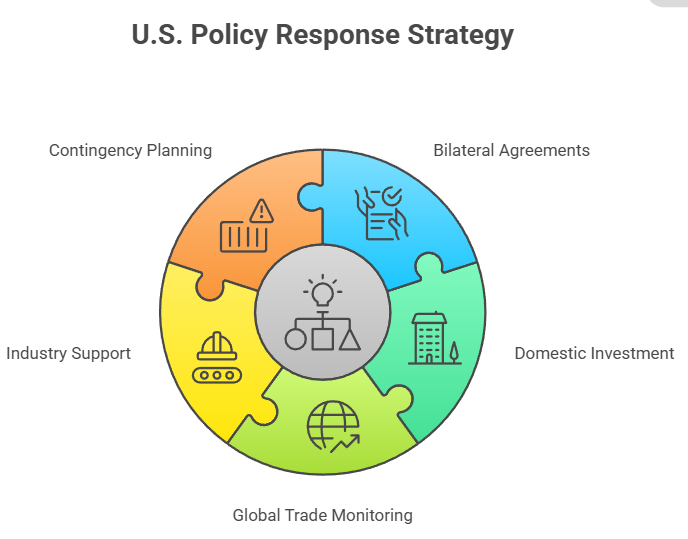
Monitor Global Trade Trends: You should be aware of the changes in world trade and respond to such changes at the policy level to avoid the possible adverse effects.
Long-Term Outlook
Canadian trade turnover is a major change in the North American trade patterns. As much as it is a challenge to the United States, its opportunities are a growth and diversification opportunity. The two countries will be forced to embrace these changes to ensure economic stability and prosperity.
